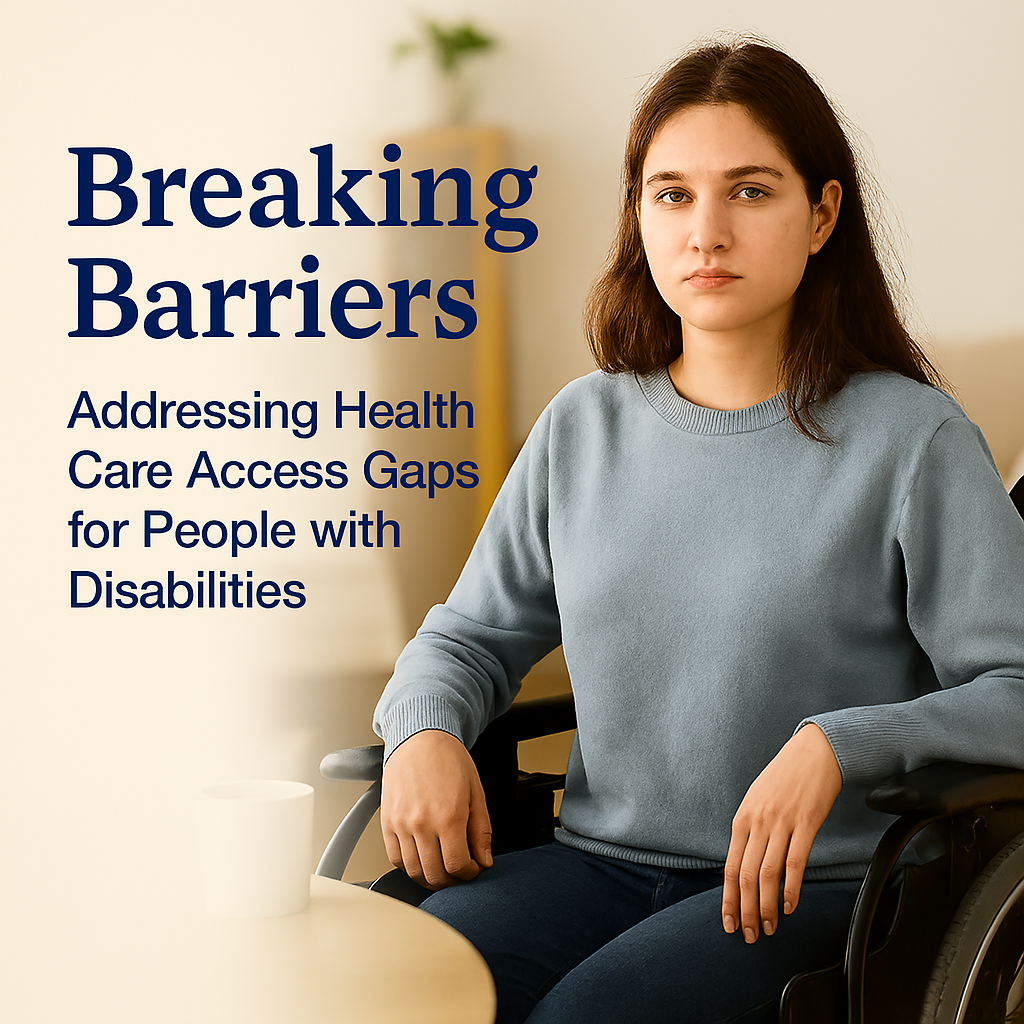
Access to quality health care is a fundamental human right, yet for millions of people with disabilities, that right remains only partially realized. Despite legal protections like the Americans with Disabilities Act, people with disabilities continue to face significant hurdles when they seek medical care, from inaccessible clinics to communication failures and insurance challenges. Recent research from the Institute for Healthcare Policy & Innovation and the University of Michigan Center for Disability Health and Wellness sheds light on these persistent gaps and points to practical solutions for a more equitable health care system.
Understanding the Gaps
One of the surprising findings from national aging research is that many older adults who qualify as having a disability do not identify as such and, as a result, do not ask for accommodations that could make health care more accessible. While only about 19 percent of adults age 50 and older report experiencing a disability, far more may meet the federal definition due to functional limitations.
Yet only a small share of those who could benefit say they have asked for or received help during health care visits, such as assistance navigating buildings or support understanding medical instructions. This gap in recognition highlights a deeper issue, disability is often invisible or misunderstood by both patients and providers. Without clear communication about needs, even well intentioned clinicians may miss opportunities to provide appropriate support.
Communication Barriers in Care
Communication challenges remain a major obstacle. Deaf individuals who use American Sign Language often experience lower health literacy than hearing English speakers, not because of ability, but because health information is rarely provided in accessible formats. Without qualified interpreters or materials designed for ASL users, patients may struggle to fully understand diagnoses, treatment options, or preventive care guidance.
Providing health information in a language and format patients truly understand, whether ASL, large print, audio, or plain language, is essential. This is not simply an accommodation, it is a matter of patient safety, autonomy, and trust.
Mobility and Navigation Challenges
Health care environments themselves can be difficult to navigate. Research from Michigan Medicine highlights the importance of training staff and volunteers to support patients who are blind or have low vision. Simple practices, such as announcing oneself by name, clearly describing surroundings, and offering guided assistance, can significantly reduce stress and improve the care experience.
At the same time, long term solutions require improvements in physical infrastructure, including clearer signage, better lighting, tactile pathways, and universal design principles. Accessibility should begin long before a patient enters an exam room.
Education and Provider Preparedness
Another critical gap lies in clinician training. Studies show that many medical trainees feel underprepared to care for patients with physical disabilities, particularly in specialized areas such as pregnancy and reproductive health. Despite higher risks of complications, disability specific education is often minimal or absent from medical curricula.
Encouragingly, when providers receive targeted training, confidence improves and so does quality of care. Many clinicians report wanting more education, signaling that progress is possible with the right investment.
Insurance and Policy Barriers
People with disabilities often need more frequent health care, but higher utilization does not always mean better outcomes. Research shows that adults with functional disabilities are more likely to receive routine services, such as medication checks, yet less likely to obtain recommended preventive care that requires extra coordination, including cancer screenings.
Insurance instability compounds these challenges. Medicaid plays a crucial role in covering health and daily living supports for many older adults and people with disabilities. When eligibility reviews resume after pandemic related pauses, coverage disruptions can occur, often without adequate notice, placing essential care at risk.
Toward a More Inclusive Health System
The research points to practical, achievable solutions:
- Routine disability screening tools in clinical settings can help identify accommodation needs early.
- Accessible communication support, including interpreters and alternative formats, improves understanding and shared decision making.
- Disability focused training for all health care staff strengthens confidence and competence.
- Policy reforms that simplify insurance renewal and prioritize preventive care can reduce disparities.
By listening to lived experiences and designing systems around real needs, health care can become more inclusive, effective, and humane.
Conclusion
Health care access gaps for people with disabilities are not inevitable, they are the result of systems that have overlooked accessibility in design, communication, and policy. Research shows clear paths forward. Ensuring equitable care is not just about compliance with laws, it is about dignity, respect, and creating health systems that truly serve everyone.